Commercial Epoxy Flooring Jobs
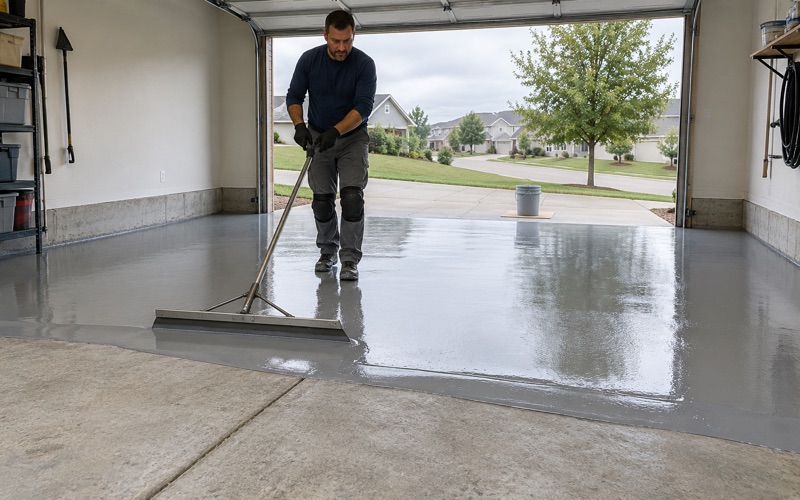
A commercial floor carries more traffic, more chemicals and tighter schedules than a home garage. We assess the slab, the loads and the cleaning program, then specify the system and thickness in writing. Schedules are built around the business so the work fits between deliveries, shifts and opening hours.
Manufacturing Floors and Fluid Exposure
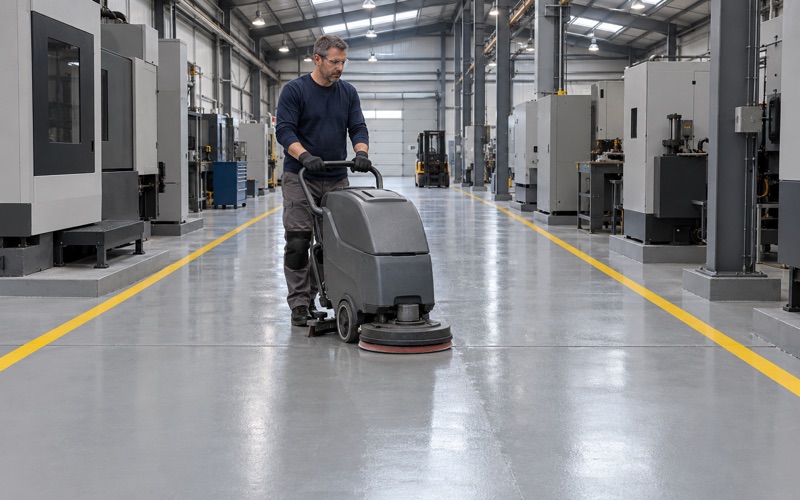
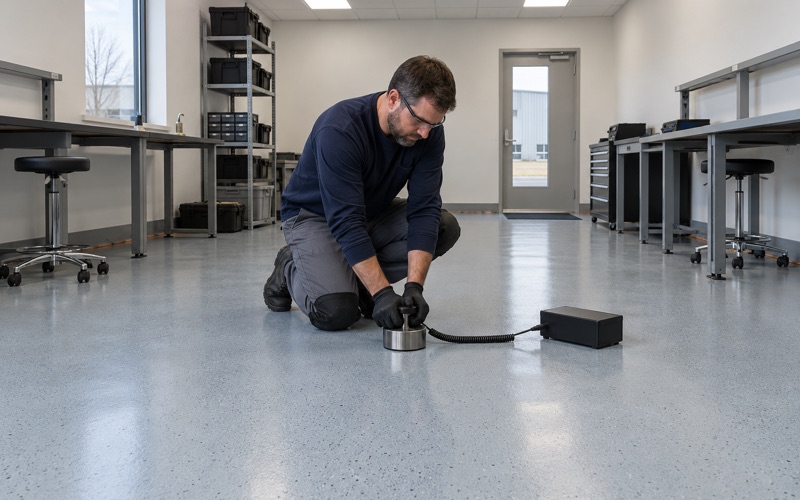
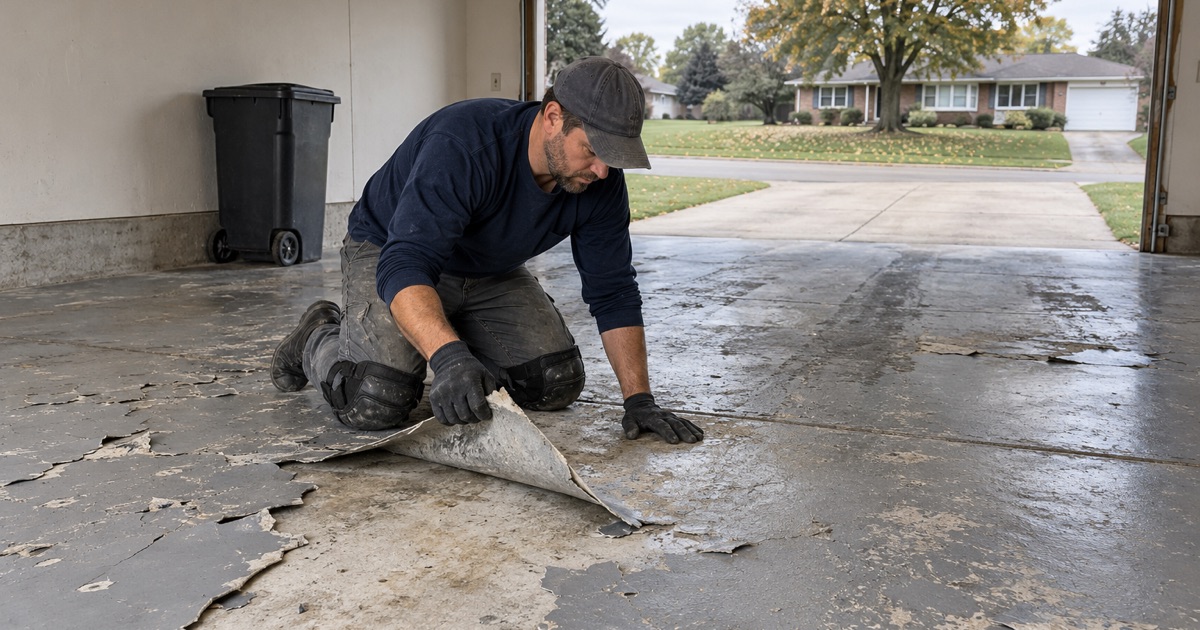
Manufacturing floors take oil, coolant, hydraulic fluid and dropped parts every day. We match the coating’s chemical resistance to the fluids actually used on the floor, and build thickness where carts and impacts concentrate. Oil-soaked concrete has to be cleaned and tested before coating, or the bond fails.
Washdown Floors in Food Plants
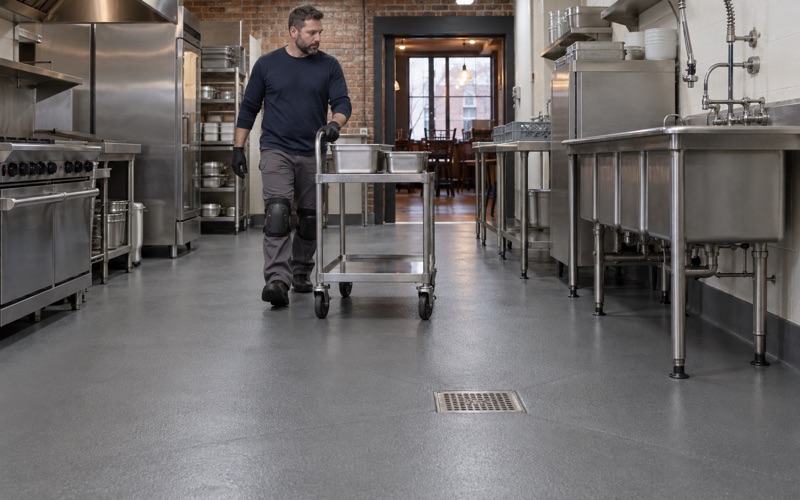
Food plant floors are washed down every shift with hot water and cleaners. That cycle of heat, moisture and chemicals tests any coating. We build those floors with sloped areas to drains, coved bases where walls meet the floor, and a texture that keeps workers on their feet when the floor is wet.
Urethane Cement for Hot Wash Areas
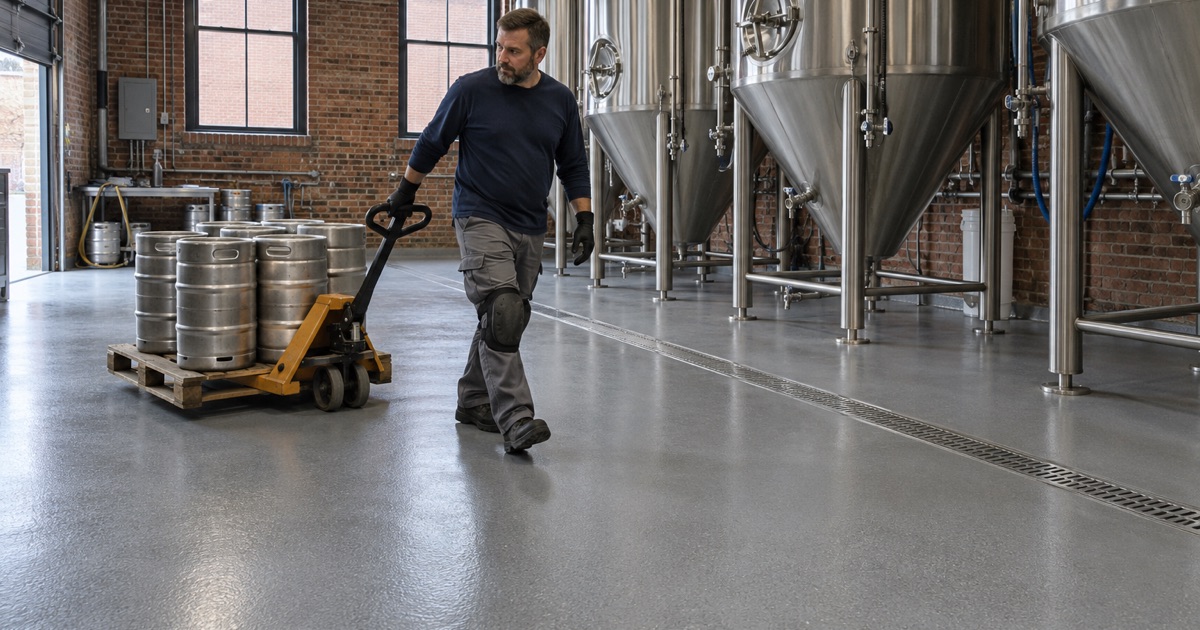
Urethane cement handles thermal shock, hot water and harsh cleaners that would soften a standard epoxy. It also tolerates more moisture in the slab during installation. For food plants, breweries and kitchens with steam and hot washdowns, we specify urethane cement where an epoxy would fail early.
Warehouse Floors Under Forklifts
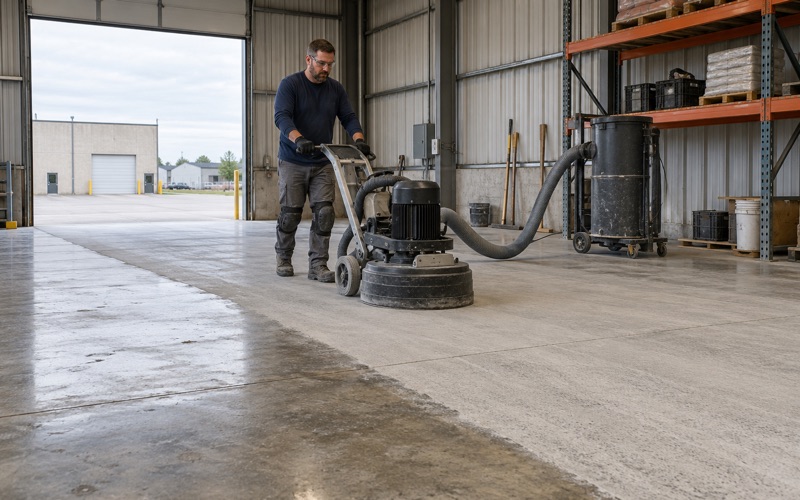
Warehouse and distribution floors take forklifts, pallet jacks and heavy racks. The coating needs to resist wear at turning points and stay bonded at joints where wheels cross. We specify the build and the joint treatment to the traffic, and phase the work so aisles stay open while sections cure.
Farm Shop and Service Bay Floors
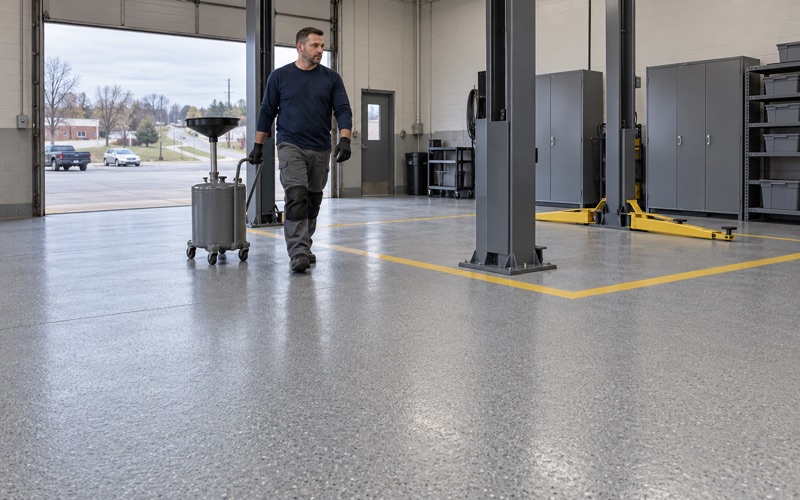
Farm shops and equipment dealer service bays see mud, fuel, hydraulic oil and heavy machines. Deicing salt comes in on the equipment through winter. We build those floors with a chemical-resistant topcoat and a texture that handles a wet floor, so the shop stays easy to clean.
Restaurant Kitchen Floors and Coved Bases
Kitchens inside the city are inspected by the City of Dubuque Health Services Department under a DIAL contract, against the 2017 FDA Food Code. Section 6-201.13 asks for coved junctures between the floor and walls, and 6-201.11 allows antislip floors in wet areas. We plan the coving, texture and drains to fit that code.
Brewery and Tasting Room Floors
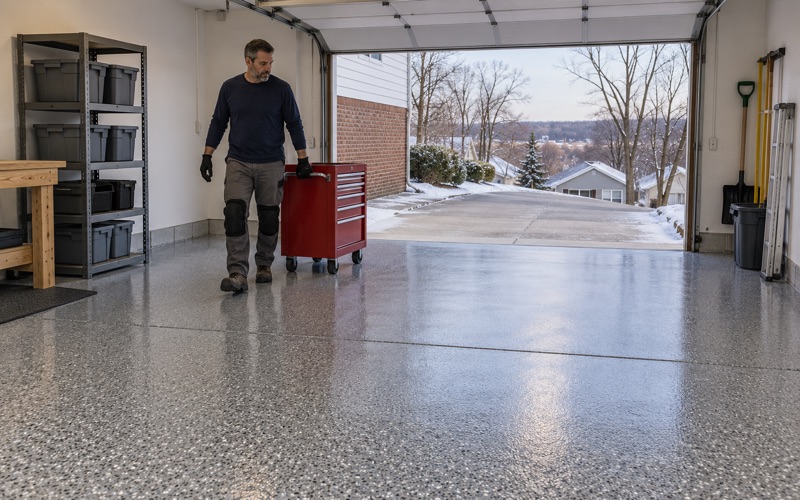
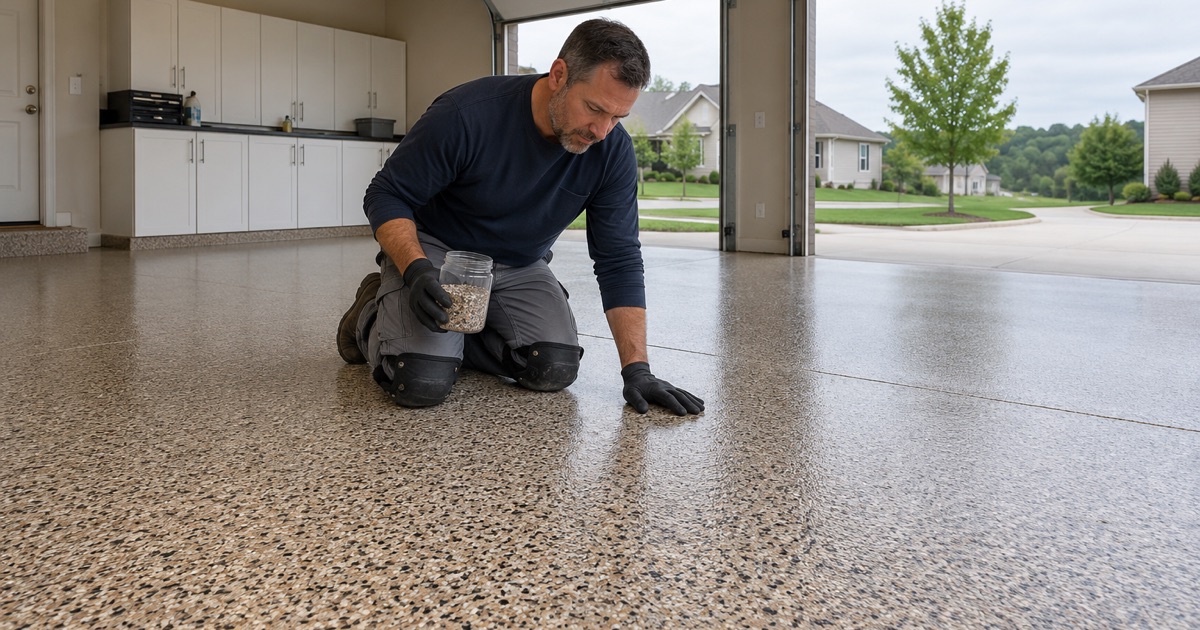
Brewery floors see spilled product, hoses, hand trucks and frequent washing. Tasting rooms need to look good while holding up to the same spills. We often split those spaces, putting urethane cement in the production area and a decorative flake or quartz system in the front, so each floor fits its job.
Office, Clinic and Showroom Floors
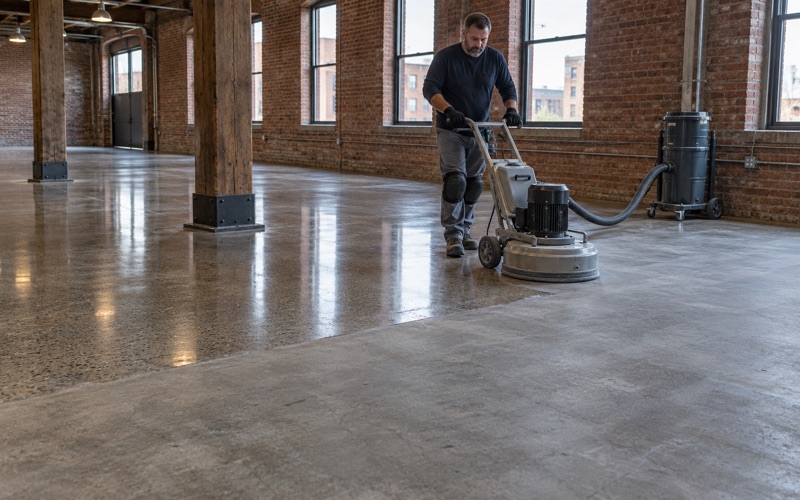
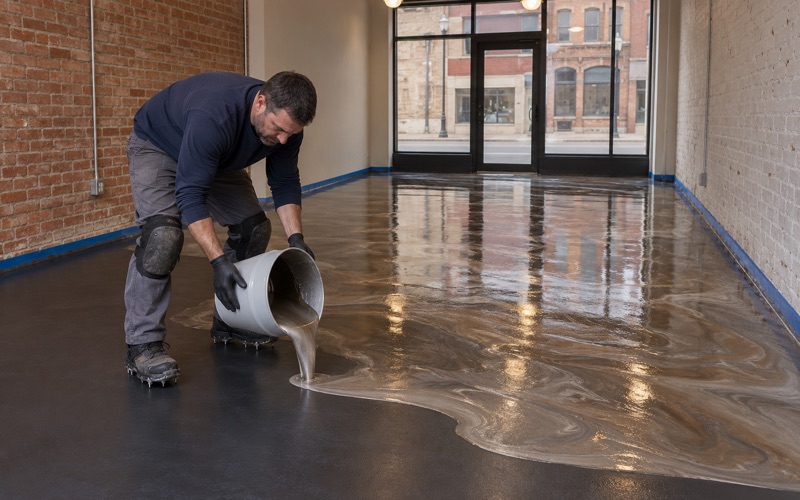
Office, clinic and showroom floors have to look finished first and resist wear second. Polished concrete, metallic epoxy and solid color systems all suit these spaces. We plan the work to keep the business open, and choose low-odor products where people are working nearby.
VOC Rules in Iowa, Wisconsin and Illinois
Iowa and Wisconsin jobs fall under the federal 40 CFR 59 Subpart D architectural coatings rule, which binds the manufacturers. Illinois has its own limits in 35 Ill. Adm. Code Part 223, so we pick products for Illinois jobs to meet them. Low-odor products are a comfort choice elsewhere, not a legal requirement.
Night and Weekend Floor Installation
Plants, warehouses and shops often cannot shut down for days. We phase the work around shifts and use overnight and weekend windows when a line cannot stop. Fast-curing polyaspartic and urethane cement systems help a section return to service sooner, and the schedule is agreed in writing before work starts.