
Dubuque Epoxy Flooring pours metallic epoxy floors in Dubuque, IA, drawing on 20+ years of concrete preparation and coating, serving surrounding cities including Asbury, Platteville, The Galena Territory, Dyersville and Lancaster. A metallic floor uses reflective pigments that move in the wet epoxy to create a marbled, three-dimensional look, and no two come out the same.
The finish is decorative, but most of the work behind it is not. Metallic epoxy shows every flaw in the slab below, from low spots and cracks to moisture coming up from underneath. That means the grinding, patching and testing matter even more than they do for a flake floor.
We test the slab before the price is final, grind it flat, and write the base coat, the metallic layer and the topcoat into the proposal by product and thickness. That gives you a clear picture of what is being installed and how it compares with any other quote.
How a Metallic Epoxy Floor Is Made
Pigments That Move
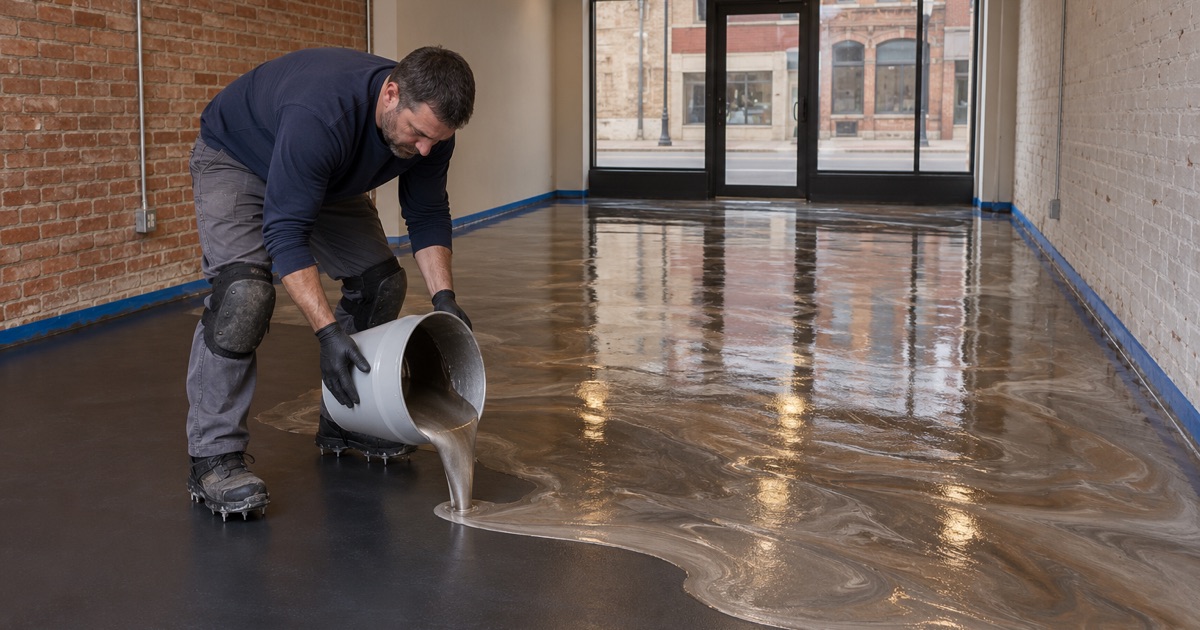
Metallic pigments are fine reflective particles mixed into a clear or tinted epoxy. As the epoxy flows across the floor, the pigments swirl, settle and catch the light differently depending on how they are worked. The result can look like marble, moving water, polished stone or a cloud-like haze.
Because the pigments keep moving until the epoxy starts to set, timing and technique decide the final pattern. The installer works the wet coating with rollers, brushes, sprayers or solvent mists to shape the movement, and that work has to happen within the product’s working time.
Choosing Colors and Patterns
Most metallic floors use one main color with one or two accent colors worked in. Silver, pewter and gray tones suit modern basements and offices, while copper, bronze and deep blue suit bars, salons and showrooms. We bring sample boards and photos so you can compare colors in your own lighting.
Pattern style ranges from a subtle, calm movement to bold swirls and veining. We talk through the look you want and explain how controllable each style is, since some effects depend more on the material than on the installer’s hand.
Why Every Floor Is Different
The same colors poured on two different days will not match exactly. Slab temperature, humidity, the size of the pour and the order of the steps all change how the pigment moves. That is part of the appeal, but it also means a floor should not be split into separate pours that are expected to match each other perfectly.
For that reason, we plan a metallic floor so each room or clearly divided area is poured in one session. Where a large space has to be split, we place the break at a doorway, a saw-cut border or a change in use, so any difference reads as a design choice.
Preparing the Slab for a Metallic Finish
Grinding and Flattening
Metallic epoxy flows toward low spots, and pigment collects where the coating is thicker. A slab with dips and humps will show them as light and dark patches. We diamond grind the slab flat, removing high spots and old coatings, and capture the dust at the machine.
Where the slab has larger dips, we fill them or use a self-leveling underlayment before the metallic coat. This step takes time, but skipping it shows in the finished floor more clearly than on any other type of coating.
Crack and Joint Repair
Cracks, spalls and joints are filled and ground flush before the base coat. Even well-repaired cracks can show faintly through a metallic finish, because the pigment settles differently over the filler. We tell you about this before the job, and decide with you whether to blend the lines into the pattern or treat joints as deliberate borders.
Cracks that are still moving need a different answer. A metallic floor over a moving crack will split along the same line, and that shows plainly in a glossy finish. If a section of the slab is unstable, we say so before you commit.
Moisture Testing
Moisture coming through a slab can cause blisters, cloudiness and discoloration in epoxy, and on a metallic floor those defects stand out. We test with an ASTM D4263 plastic sheet test, ASTM F1869 calcium chloride kits or ASTM F2170 relative humidity probes, depending on what the slab shows.
If the readings are high but there is no active water, a moisture-mitigation primer can go down first. If water is coming in, that has to be fixed, and the warranty will not cover moisture failures either, which we explain before you sign.
Installing the Metallic Layers
The Base Coat
A tinted base coat goes down first over the ground and repaired slab. It seals the concrete, gives the metallic layer an even background color, and helps prevent air from rising out of the slab into the decorative coat. The base color affects how the metallic reads, so it is chosen with the pigments.
Outgassing is the reason this layer matters so much. Concrete holds air in its pores, and as a slab warms during the day, that air can rise into a fresh coating and leave pinholes. A sealed base coat applied at the right slab temperature keeps those bubbles out of the decorative layer.
Pouring and Working the Metallic Coat
The metallic epoxy is mixed and poured in sections, then spread and worked while wet. The installer creates movement with tools and techniques chosen for the look you picked, working steadily so the sections blend without visible seams. This is where experience matters most.
We control the room during this step. Dust, drafts and foot traffic can mark a wet metallic coat, so the space is closed off until the coating has set enough to be safe.
The Clear Topcoat
Epoxy ambers under ultraviolet light, and a metallic floor near windows or doors will yellow without protection. We finish most metallic floors with a polyaspartic or urethane topcoat that resists ultraviolet light and abrasion. The topcoat also sets the sheen and can carry a fine grit for traction.
The topcoat is also the part that wears. Over years of foot traffic it can dull in walkways, and it can be lightly abraded and recoated to restore the surface without disturbing the metallic layer beneath. That is a far smaller job than redoing the whole floor.
Where Metallic Floors Work Best
Finished Basements and Living Spaces
In a finished basement, a metallic floor gives a family room or bar area a polished look without the risk of carpet over a slab that may see moisture. The moisture test still comes first, and we look at the sump pit and floor drain for any sign of past water.
Older basements often need the most preparation, since they can carry layers of paint, patches and old tile adhesive. All of it is ground off before the base coat. Because the space shares air with the house, we offer low-odor products as a comfort choice and give you a time to return to the room.
Showrooms, Salons and Offices
Commercial spaces use metallic epoxy to make the floor part of the design. Showrooms, salons, offices and bars can use brand colors or logos set into the floor. We schedule the work to keep the business running and choose topcoats that hold up to daily cleaning.
Entries need the most thought in a commercial space. Grit tracked in from parking lots scratches a glossy floor quickly, so we plan walk-off mats and may use a satin topcoat in the first few feet inside the door. On Illinois jobs, products are selected to meet the state’s own VOC limits.
Where We Steer You Elsewhere
Metallic floors are not the best choice for garages that see heavy salt, workshops with dropped tools, or floors that are wet much of the time. In those spaces, a flake or quartz system with a textured topcoat performs better, and we will tell you so.
- 20+ Years on Concrete
- Moisture Tested Before Pricing
- Diamond Ground, Never Acid Etched