
Dubuque Epoxy Flooring installs industrial epoxy flooring in Dubuque, IA for manufacturing plants, warehouses, food and beverage facilities, fabrication shops and farm equipment buildings, serving surrounding cities including Asbury, Platteville, The Galena Territory, Dyersville and Lancaster. We bring 20+ years of concrete preparation and coating to floors that carry forklifts, chemicals and full production schedules.
An industrial floor is a working surface. It takes hard wheels, dropped parts, oil, coolant and repeated cleaning, and when it fails, the cost is measured in downtime as well as repairs. The coating system has to match the loads and chemicals on that specific floor, not a generic spec sheet.
We walk the floor with your maintenance and operations staff, look at what is used and spilled in each area, and test the slab. The written proposal names the system, coats and finished thickness by area, along with the schedule for working around your shifts.
Matching the System to the Floor
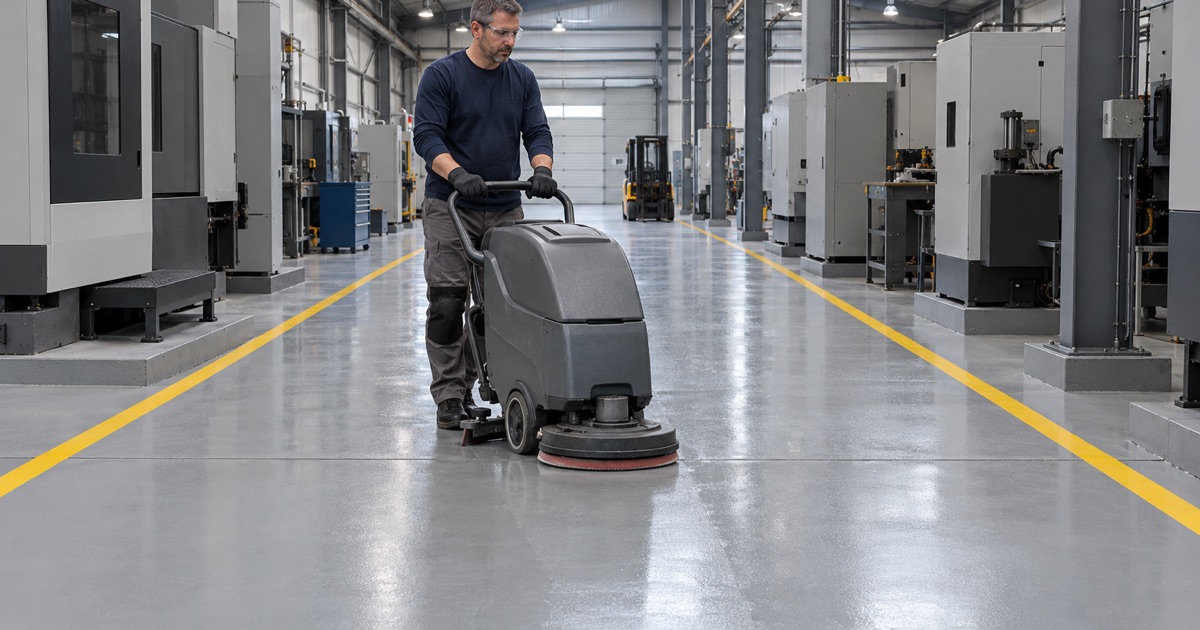
Manufacturing and Fabrication Floors
Manufacturing floors see oil, coolant, hydraulic fluid, solvents and dropped parts every day. We match the coating’s chemical resistance to the fluids actually used and build extra thickness where impact and carts concentrate, such as around machines and at loading points.
Fabrication areas with welding and grinding need a system that handles hot sparks, heavy steel and abrasion. In those zones, a thicker build or a broadcast system often outlasts a thin roll coat many times over.
Warehouses and Distribution
Warehouse floors take forklifts, pallet jacks and heavy racking. Wear concentrates at turning points, dock doors and where wheels cross joints. We build those floors with an abrasion-resistant topcoat and pay close attention to joints, where chipped edges can start a failure that spreads.
Many warehouses benefit from a lighter floor color, which makes the space brighter and easier to see. Aisle lines and zones can be coated into the system at the same time.
Food and Beverage Plants
Food and beverage plants wash floors down every shift with hot water and cleaners. That combination of heat, moisture and chemicals softens many epoxies over time. In those areas we usually specify urethane cement, which handles thermal shock and steam cleaning far better.
Those floors are also built with slope to drains, coved bases at the walls and a texture that keeps workers on their feet when wet. The details at drains and walls matter as much as the field of the floor.
Farm Shops and Equipment Buildings
Farm shops and equipment dealer service areas see mud, fuel, hydraulic oil and heavy machines. In winter, deicing salt rides in on the equipment. A chemical-resistant system with a textured topcoat keeps these floors easy to clean and safer underfoot when wet.
Many of these buildings are only partly heated, which affects when a floor can be coated. Cure schedules follow the slab temperature and the dew point, so a shop that cannot be kept warm through a Dubuque winter is usually scheduled for the warmer months.
Preparing an Industrial Slab
Shot Blasting and Grinding
Industrial coatings need a deeper surface profile than most residential floors. Shot blasting opens large open areas quickly to the concrete surface profile the system calls for, while diamond grinders handle edges, corners and areas around equipment. Both run with dust collection.
Around anchored machines, drains and trench grates, the coating needs a clean termination that will not be undercut by liquids. We cut keyways or anchor grooves at those edges so the coating ends locked into the slab rather than as a thin feathered edge that chips and lets fluids under.
Contaminated and Oil-Soaked Concrete
Older plants often have years of oil and coolant soaked into the slab. Grinding removes surface contamination, but deep oil can seep back up under a coating and break its bond. We degrease, grind and test those areas, and in the worst cases recommend cutting out and replacing sections.
Old coatings, failed patches and spalled joints are mapped before work begins. We say plainly when a section of slab needs repair or replacement before it is coated.
Moisture in Plant Slabs
Industrial slabs on grade can carry moisture from the soil, especially where a vapor retarder was never installed or has failed. We test with ASTM F1869 calcium chloride kits or ASTM F2170 relative humidity probes. Urethane cement or a moisture-mitigation primer may be the answer where readings run high.
Coating warranties generally exclude failures from moisture vapor transmission and hydrostatic pressure. We explain that before the job is sold so the moisture question is settled up front.
Working Around Production
Phasing and Shutdown Windows
Plants and warehouses rarely shut down for long. We phase the work by area and use overnight, weekend and holiday shutdown windows when a line cannot stop. Fast-curing systems shorten the time each area is out of service.
The schedule is planned with your operations team, including where equipment moves, how traffic reroutes and when each area returns to use. Every phase is written down before work begins.
Equipment, Dust and Odor
Dust is captured at the grinder and shot blaster so it does not settle on equipment or product. We seal off work areas and keep ventilation running. Where odor matters near occupied areas, we offer lower-odor products, and on Illinois jobs we select products that meet the state’s own VOC limits.
Safety and Upkeep
Slip Resistance
Wet, oily and washdown areas need texture. We specify slip resistance by the broadcast, such as quartz aggregate, and by the topcoat used, rather than promising a nonslip floor in general terms. Different areas of the same plant can carry different textures.
There is a balance to strike, because a heavier texture grips better but is harder to clean. We set a coarser finish where floors stay wet or oily and a finer one where carts roll and the floor is cleaned often, so each area gets the grip it needs without becoming a dirt trap.
Safety Lines and Zones
Aisle lines, pedestrian walkways, forklift lanes and equipment zones can be built into the coating system. Coated lines last much longer than paint or tape on bare concrete, and they can be planned around your current layout and safety program.
Maintenance and Recoating
Industrial floors wear first in traffic lanes and at turning points. A worn topcoat can be abraded and recoated without removing the whole system, which takes far less downtime than a full replacement. We leave cleaning and inspection guidance for your maintenance staff.
- 20+ Years on Concrete
- Moisture Tested Before Pricing
- Diamond Ground, Never Acid Etched