
Dubuque Epoxy Flooring grinds and polishes concrete floors in Dubuque, IA and has worked on concrete for 20+ years, serving surrounding cities including Asbury, Platteville, The Galena Territory, Dyersville and Lancaster. Polished concrete turns the slab you already have into the finished floor, with no film on top to peel, scratch through or recoat.
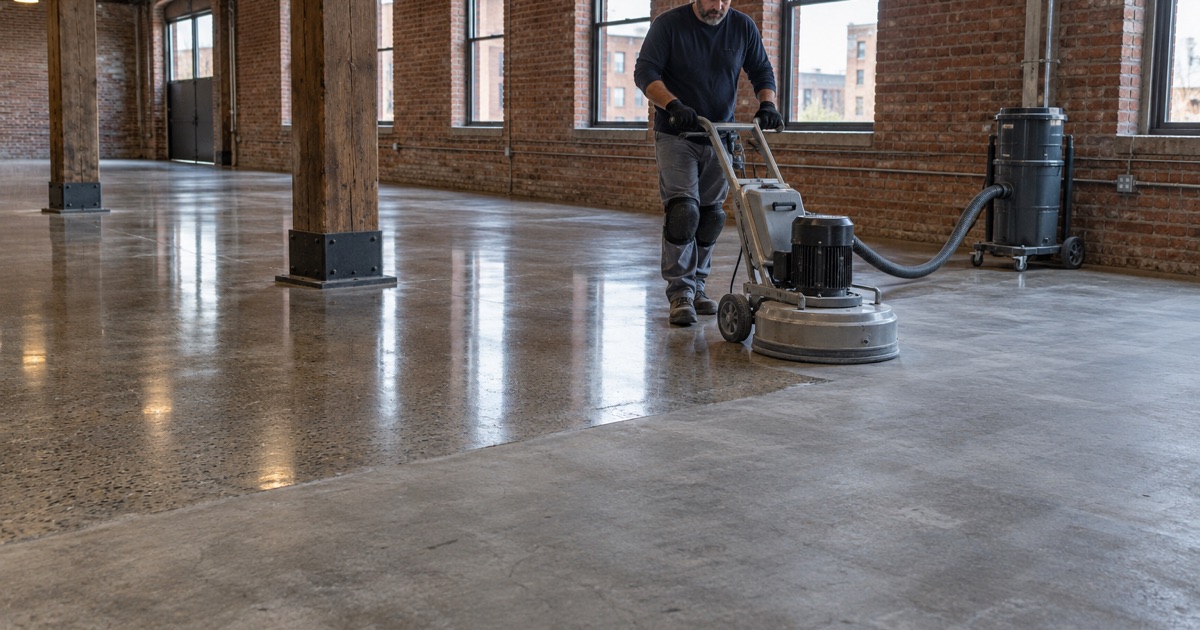
The process uses the same diamond grinders we use to prepare slabs for coatings, run through a longer sequence of finer tooling. A lithium silicate densifier hardens the surface partway through, and the final passes bring up the sheen. The result suits showrooms, offices, warehouses and the open living spaces of homes alike.
Every slab polishes differently. Old patches, hidden adhesive and soft spots only show up once the grinder opens the surface, so we grind a test area before we quote the finish, and the proposal names the densifier, the exposure level and the sheen you are paying for.
Commercial and Residential Polished Concrete
Showrooms, Offices and Retail Floors
Commercial spaces use polished concrete because it looks finished, takes heavy foot traffic and does not need stripping and waxing. Showrooms and retail floors usually go to a higher sheen, with dye or saw-cut patterns to tie the floor to the brand. We schedule the grinding around opening hours and capture the dust at the machine, so the work does not coat merchandise or offices.
Clinics and offices often choose a lower sheen that hides scuffs and reads more calmly under bright lighting. In both cases, the floor is planned around how it will be cleaned and maintained, since the cleaning program keeps the shine more than anything we do on install day.
Warehouse and Shop Floors
In warehouses and shops, polished concrete is chosen for durability rather than looks. The densified surface resists dusting under forklift and pallet traffic and is easy to sweep and scrub. We usually stop at a lower polish level there, since the hardness and flatness matter more than reflection.
Shop slabs that see oil and coolant need a stain guard and fast cleanup, because polished concrete is porous enough to take a stain. Where chemical exposure is heavy, we may recommend a coating instead and explain why.
Polished Concrete in Homes
In homes, polished concrete shows up on basement floors, slab-on-grade additions and open main floors. It pairs well with in-floor heat and with rugs in living areas. Basement slabs need a closer look first, because many older Dubuque basements carry paint, patching and tile adhesive that have to come off before polishing.
Choosing the Look
How Much Aggregate Shows
The depth of the grind decides how much stone you see. A light grind leaves a cream finish with almost no aggregate, a medium grind shows salt-and-pepper specks of sand and small stone, and a deeper grind exposes the larger aggregate across the floor.
The catch is that you cannot see the aggregate before grinding starts. Some slabs have uneven stone distribution or were troweled hard in some areas and soft in others. Our test grind shows what your slab holds before you commit to an exposure level.
Sheen Levels
Polish level runs from a flat honed finish to a high-gloss reflection. A higher sheen looks dramatic in a showroom but shows scratches and grit more quickly in a busy entry. A satin finish is the common middle ground for homes and offices.
Sheen also depends on how the floor is lit. Large windows and bright overhead fixtures show every swirl and scuff on a high polish, while a lower sheen softens glare and keeps the floor from looking wet. We look at the room’s lighting with you before settling on the level.
Dyes, Borders and Saw Cuts
Water- or solvent-based dyes add color during the polishing sequence, and different colors can be used in sections divided by saw cuts. Borders, logos and grid lines can be cut into the slab and dyed before the final polish. We test dye on your slab because the same color reads differently on every pour.
Saw cuts are planned around the existing control joints, since a new line laid just beside an old joint looks like a mistake. Where the layout allows, we use the joints themselves as part of the pattern, which keeps the design tidy and avoids cutting more than the floor needs.
Our Step-by-Step Polished Concrete Process
Step 1: Assessment and Test Grind
We look at the slab’s age, cracks, joints, patches and any old coating, and check for signs of moisture. Then we grind a small area to see the aggregate and hardness. That test sets the exposure level and the tooling for the job.
We also note where water, oil or salt has worked into the slab over the years, since those spots can polish and take dye differently from the rest. Anything we find goes into the written proposal, so the finish you agree to is based on your slab rather than a brochure.
Step 2: Removing Coatings and Filling Defects
Old paint, sealer and adhesive come off first. Cracks and joints are filled with a repair material suited to polished floors, and pits are filled so the surface polishes evenly. We explain that filled cracks will show as lines in the finished floor rather than vanish.
The removal work is dust-captured at the grinder rather than rinsed away. Old mastic and paint residue should not be washed toward a floor drain or out to a storm inlet, so the waste is vacuumed, bagged and hauled off with the rest of the job debris.
Step 3: Grinding and Densifying
Coarse diamonds flatten the surface and reach the chosen exposure. Partway through the sequence, we apply a lithium silicate densifier, which reacts with the concrete to harden the surface and reduce dusting. The densifier needs time to soak in and react before grinding continues.
Densifying is what keeps a polished floor from dusting under traffic and helps it hold its sheen. On older or softer concrete we may apply it more than once, and we check the surface hardness before moving on to the finer polishing passes.
Step 4: Polishing to the Final Sheen
Finer diamonds then refine the scratches left by each previous pass until the surface reaches the agreed sheen. Dye goes on during this stage if it is part of the plan. The final passes are where the reflection comes up.
Skipping a step in the sequence leaves scratches from the coarser tooling that show up later under raking light. We work through each pass in order and check the floor under the room’s own lighting before calling the polish finished.
Step 5: Guard and Care Instructions
A penetrating guard is applied last to help the floor resist staining, then burnished in. We leave care instructions that name the cleaner type to use and the ones to avoid, since acidic cleaners will dull a polished floor quickly.
When a Coating Is the Better Choice
Heavy Chemical and Wet Exposure
Polished concrete is still porous concrete. Kitchens, food plants and shops with strong chemicals or constant water usually do better with a sealed system such as epoxy or urethane cement. We tell you when that is the case instead of polishing a floor that will stain in the first month.
The same goes for garage floors that see heavy salt. Calcium chloride brine can work into a polished surface over a long winter, while a coated garage floor keeps the slush on top. For most garages, we recommend a flake or polyaspartic system over polish.
Damaged or Very Soft Slabs
A slab with heavy spalling, wide cracks or very soft paste may not polish into an even floor. A coating can cover patched areas that would stand out in a polished finish. The test grind usually answers this question before you spend anything on the full floor.
When a slab is too damaged for either option, we say so and explain what repair or replacement would involve. Coating or polishing a slab that is breaking apart only hides the problem for a short time, and the cost of doing the floor twice is higher than doing the repair first.
- 20+ Years on Concrete
- Moisture Tested Before Pricing
- Diamond Ground, Never Acid Etched